5 Things You Need to Know About the Trump Meme Coin Controversy
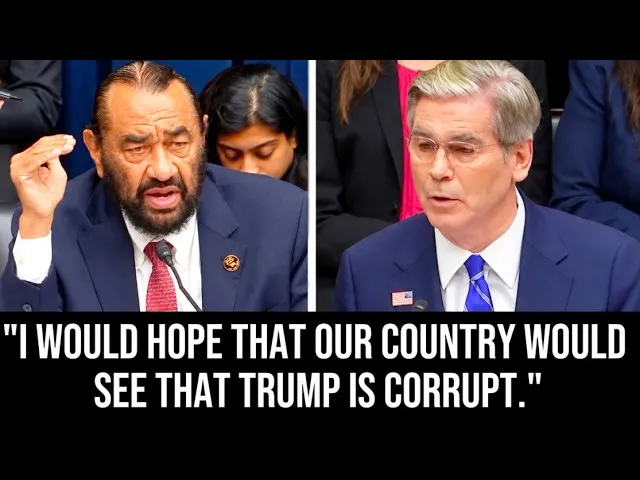
Video: WHOA: Al Green GRILLS Bessent over Trump's meme coin “scam”
Want articles like this for your own video to promote it on YouTube and Google? Order them through the Telegram bot @sat_sit_bot. Articles with your video embedded are written and posted by the bot itself — on popular topical sites (no ads). Free trial — 50 articles.
A meme coin is a cryptocurrency whose value rests on hype, community attention and celebrity backing rather than on any product, revenue or cash flow — and the Trump meme coin controversy shows exactly what happens when that model meets politics. Senator Al Green used a Senate hearing to press Treasury Secretary Scott Bessent over the token, framing it as a "scam," while Bessent declined to adopt that label. The exchange, broken down by Daniel Reed, is a compact case study in how political meme coins work and what retail traders should watch for.
What the Al Green and Bessent exchange actually established
The core of the hearing was a definitional fight: whether a token launched by a political figure and traded on public exchanges fits the ordinary meaning of a scam or a security. Green's line of questioning treated the coin as a vehicle that transfers wealth from late buyers to early insiders, and he pushed Bessent to say so on the record. Bessent's responses stayed inside the language of market oversight, declining to characterize the asset personally 00:00.
That refusal matters for traders because it signals where regulatory attention is and is not focused. Nothing in the exchange produced a new rule, a enforcement action or a formal classification. What it produced was political pressure and a public record that the Treasury's top official would not call a presidential-linked token a fraud when asked directly.
Why meme coins behave like a pyramid in practice
A meme coin has no earnings, no collateral and no redemption mechanism. Price is set entirely by the flow of new buyers, which means the structure rewards whoever bought earliest and whoever controls the largest supply. When new demand stops, the last holders absorb the entire decline.
Several practical features make this worse than a simple speculative bet:
- Concentrated supply. A small number of wallets typically holds a large share of the token, so insiders can sell into retail demand.
- Thin liquidity. Order books are shallow, so a moderate sell order can move the price sharply against holders.
- No cash flow anchor. There is no earnings floor to value the asset against, so there is no natural bottom.
- Narrative dependence. Attention decays, and when it does, the token has no reason to hold value.
Viewers of the hearing repeatedly compared the structure to a Ponzi or pyramid scheme. The distinction is technical — a Ponzi requires a promoter paying old investors with new money — but the investor outcome is often the same: gains for the early cohort, losses for the late one.
The political token problem: access, influence and disclosure
Political meme coins add a dimension that ordinary meme tokens do not have: the issuer can influence policy. That creates a plausible non-financial motive for buying, whether it is access, signaling loyalty or hedging regulatory risk. When buyers are motivated by something other than expected return, normal price signals stop working as a warning system.
This is the substance of the criticism raised in the hearing and in public reaction to it. The concern is not only that some buyers lose money, but that the token creates a channel through which money can flow toward a political figure without the disclosure rules that apply to campaign contributions. Bessent was questioned on precisely this overlap between a financial product and a political relationship.
For traders, the takeaway is that political tokens carry headline risk that has nothing to do with crypto market conditions. A single congressional hearing, subpoena or ethics inquiry can reprice the asset faster than any on-chain metric.
How retail buyers actually end up in these tokens
Retail participation in meme coins is rarely driven by a thesis. It is driven by momentum, social feeds and the fear of missing a move that others appear to be profiting from. By the time a political meme coin reaches mainstream coverage, the early accumulation phase is over and the remaining upside depends on finding a buyer willing to pay more.
The pattern in the hearing coverage is familiar: buyers enter after the headline, hold through the drawdown, and only then look for someone to blame. The uncomfortable point raised in the discussion is that the mechanics were public from the start — supply concentration, lack of utility and dependence on the promoter's continued attention were all visible before the first purchase.
A practical checklist before buying any meme coin:
- Check how much supply the top wallets hold; anything above a small fraction is a red flag.
- Look at liquidity depth, not just market capitalization.
- Ask what the token does if the promoter stops posting about it.
- Assume you are the exit liquidity unless you have evidence otherwise.
What the hearing did not settle
No enforcement action followed the exchange, and no regulator present classified the token as a security or a fraud. That ambiguity is itself the story: existing securities and commodities frameworks were not designed for an asset whose value proposition is a personality. The gap between what critics believe the token is and what officials are willing to call it remains open.
Traders should treat that gap as unresolved risk rather than as exoneration. Political attention to a token tends to increase volatility in both directions, and the absence of a formal label does not remove the structural problems of concentrated supply and absent cash flow. The same features that made the token newsworthy are the ones that make it dangerous to hold through a news cycle.
Conclusion
The Trump meme coin controversy is less about one token than about a structure: celebrity issuance, concentrated supply and retail buyers arriving last. Senator Al Green's questioning of Scott Bessent put that structure on the public record, even though it produced no new rules. For anyone trading meme coins, the lesson is to separate the political argument from the market mechanics — and the mechanics are what determine who wins and who pays. Daniel Reed's breakdown of the hearing is a useful starting point for understanding how the political and financial arguments intersect.
FAQ
Key takeaways
- Senator Al Green pressed Treasury Secretary Scott Bessent over the Trump meme coin during a Senate hearing, calling it a "scam" in his questioning.
- A meme coin is a cryptocurrency with no underlying product or cash flow whose value depends almost entirely on community attention and hype.
- Political meme coins concentrate risk: insiders and early holders typically control supply, while late buyers absorb the losses.
- Treasury officials at the hearing avoided labeling the token a scam, which critics read as a refusal to apply existing investor-protection language.
- Most retail buyers of these tokens are attracted by access, speculation or short-term momentum rather than any utility.
Source: WHOA: Al Green GRILLS Bessent over Trump's meme coin “scam” · Markdown version
Questions & answers
Is the Trump meme coin legally a scam?
No authority has formally classified it as a scam. Senator Al Green characterized it that way during questioning, but Treasury Secretary Scott Bessent declined to use the label, and no enforcement action or court finding has established fraud. Legally, the token remains an unclassified speculative asset.
What is the difference between a Ponzi scheme and a meme coin?
A Ponzi scheme is a fraud in which a promoter pays earlier investors with money from new ones while promising returns. A meme coin has no such promise and no operator paying returns, but it shares the same dependency on new buyers: early holders profit only if later buyers pay more. The outcome for late buyers can be identical even though the legal category differs.
Why do people keep buying meme coins after warnings?
Buyers are usually responding to momentum and social proof rather than analysis, and some are motivated by access or political signaling rather than expected return. Because there is no cash flow to value the token against, price becomes the only signal, and rising price is read as validation. That feedback loop tends to end only when new demand stops.
What should I check before buying a political meme coin?
Check the concentration of supply in top wallets, the depth of liquidity, and what happens to demand if the promoter stops engaging. Assume that insiders have better information and earlier entry than you do. Any token whose value depends on a single person's attention carries headline risk that no technical analysis can price.